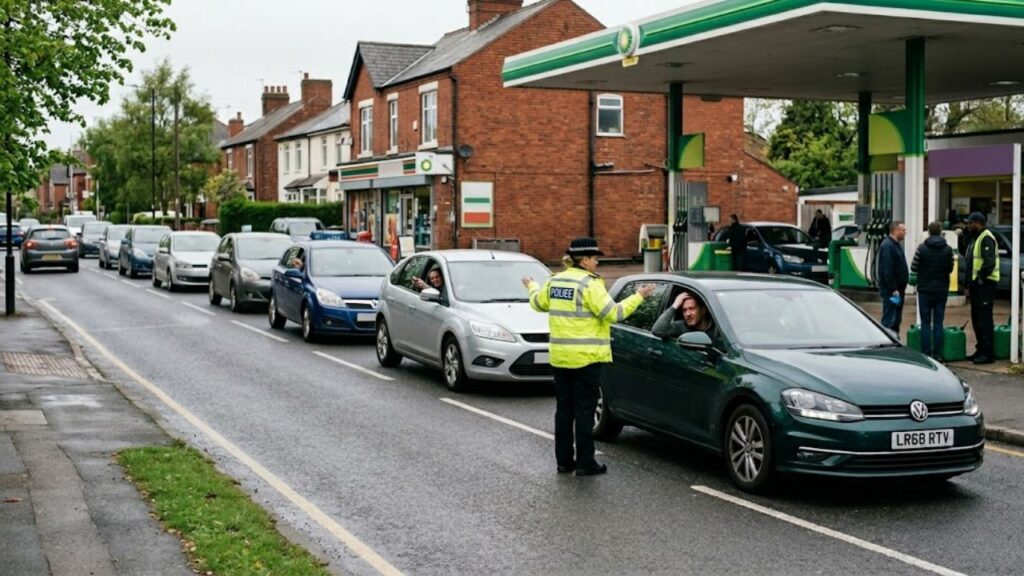
Amid rising tensions involving Iran, the UK government has begun preparing contingency plans to manage potential disruptions in fuel supply. These plans aim to ensure that critical sectors such as healthcare and emergency services are prioritised if shortages occur. Downing Street has reassured the public that petrol stations across the UK remain well-stocked and that there is currently no immediate shortage. Britain’s diversified fuel sourcing strategy is helping maintain stability despite global uncertainty.
Strait of Hormuz Blockade Impacts Global Oil Flow
The situation has intensified due to Iran’s blockade of the Strait of Hormuz, a key route responsible for transporting nearly 20% of the world’s oil. Prime Minister Keir Starmer held discussions with industry leaders and confirmed that the government is preparing for “all eventualities.” He urged the public to continue normal behaviour and avoid panic buying, emphasizing that the current supply situation remains under control.

Diesel Shortage Risk Emerging by Late April
While petrol supplies are expected to remain stable, experts have raised concerns about a possible diesel shortage. Ashley Kelty, an energy analyst at Panmure Liberum, warned that the UK could begin experiencing diesel supply issues by late April. According to analysts, the government is being cautious in its messaging to prevent unnecessary panic among consumers.
 DWP £300 Payment Update 2026: New Policy Change Could Deliver Boost to Eligible Households
Essential Industries May Get Priority Access
If fuel supplies become constrained, the government may prioritise essential sectors. This includes emergency services, public transport, healthcare, and food distribution networks. Industry bodies have stressed the importance of ensuring uninterrupted supply chains, particularly for food and essential goods, to avoid wider disruption.
Manufacturing Sector Could Face Pressure
Energy-intensive industries may also feel the impact if fuel costs continue to rise. Representatives from manufacturing groups have indicated that some factories could be forced to scale back production in the coming weeks. This could have a ripple effect on the broader economy if energy constraints persist.
Emergency Measures Framework Already in Place
The UK has an established emergency fuel plan, last updated in 2024, which outlines steps to be taken during severe shortages. These measures include fuel rationing, limiting purchase volumes for consumers, and restricting fuel availability to specific times. Emergency and essential services would be given top priority under this framework.

Possible Measures to Reduce Fuel Consumption
To manage demand, temporary measures such as encouraging remote work, reducing domestic flights, and lowering speed limits could be introduced. The International Energy Agency has previously recommended these steps as effective ways to reduce fuel consumption during supply constraints.
Military and Reserve Support Options
In more severe scenarios, the government could deploy the Armed Forces to assist with fuel distribution. A reserve fleet of fuel tankers is also available to increase delivery capacity. Additionally, emergency oil reserves may be released to stabilise supply, as seen in a coordinated action earlier in April.
Government and Industry Must Work Together
Prime Minister Starmer emphasised the importance of collaboration between the government and major industry players such as Shell, BP, and Maersk. He highlighted that a joint effort is essential to manage rising energy costs and maintain supply stability, ensuring minimal impact on the public.